Showing posts with label Goan Cuisine. Show all posts

Thursday, May 12, 2011

Goa’s healthy foods

Goa abounds in beauty and serenity. It also abounds in a rich cuisine most of which has been inherited from inputs of Portuguese cuisine including the ingredients that go into Goan cooking. When it comes to eating healthy foods, Goans often take a back seat in preference of bad eating habits and underscore on their dietary requirements thereby compromising on nutritional values required for a healthy growth.

In Goa, we have various natural foods which are rich in their nutritional value. Vegetables in Goa which are grown in the villages and across the highways of Goa are rich sources of vitamins, iron and magnesium. Vegetables such as tambdi bhaji, ghosale, padval etc are a must in the Goan diet for healthy foods.The Hindu community of Goa prepares a pulse-vegetable curry known as “khatkhattem” which is very healthy as it contains rich proteins, calcium and ragi. The popular “Bhakri” is also composed of Ragi.

Fish is a natural staple food for many Goans and is also gifted with proteins and calcium. The Kokum juice has been traditionally used in Goan cooking and is now consumed as a health drink or simply eaten as a fruit in Goa. Kokum is known to reduce levels of cholesterol and also assists digestion. In the summers season, Goa’s tender coconut juice and soft pulp of the coconut fruit has a cooling effect while providing rich potassium content. Red rice or “ukdde tandul” especially the traditional Goan rice such as ‘azgo” has more fibre and B complex vitamins and can be regularly consumed as “kanji”

Gopan papayas have also content of vitamin A and fibre while bananas promote adding of weight and have resistant starch in them. Watermelon which is a favorite among Goans is very refreshing and full of water. Mangoes lend the high dietary fibre and contain beta carotene. Often a mango a day can be quite satisfying for the necessary health.

Goan cucumbers are rich in water soluble vitamins and can easily substitute a salad when eaten with salt. They are also excellent for diabetes patients with heart problems and also good against obesity.

Breakfast options in Goa include ‘koiloyos” which are made from Goan rice and can be very rich, healthy and filling. For bread, it is better to opt for whole wheat bread or better “chapatis” made out of wheat which are also very good.

Tuesday, December 22, 2009

The Goan Christmas beckons Goa

Its the all too familiar sight in Goa at this time of the year. The streets packed to capacity. Traffic snarls all over the city. The town painted red with with the memorabilia of Christmas. Santa Claus waving from the glimmer of paint from glass fronted shops, Christmas carols renting the air and absolutely no place to park your two wheeler, while your four wheeler has no ambitions to make to the city for a long time to come.

From music shops to food outlets, to cloth shops to gift shops and groceries to Goa Christmasdesigners, from stationers to hair stylists and beauticians  to cold storages and sweet marts, there is a buzz of big time business in Goa for all merchants at this time of the year. With barely 2 days for the Christmas cheer to ring in, there is therefore the last minute scramble to fill up the missing ingredients to ensure that this years Christmas is not compromised for anything.

The prices of eggs normally soar in Goa at this time with a commanding premium. Eggs are major ingredients in many of the Christmas sweets and the Goan Bebinca which is a class favourite among Goans calls for a lot of the egg. Broken eggs or damaged shell eggs do not remain on the shelf and are quickly whipped off by Bebinca makers. These eggs are cheaper compared to normal eggs.

The prices of all essential commodities also become steep as demand rises for various food items. Cashew nuts which is also another major ingredient for many Goan Christmas sweets such as cakes and marzipan, is also in great demand. Demand for Christmas decor always satisfies the passion of most Goans and you will find the streets filled wmarzipan - Goa christmas sweetsith Christmas decor of all types most of which is imported from China and has a lot of takers here. The Goan  Christmas "star" has innovated over the years and the various styles are on display. However nothing can obviously beat the home-made bamboo star which many Goans fondly fabricate till date and the same brings nostalgia to the Goan Christmas.

Goans are also passionate about their clothing and the women always prefer to ring in Christmas while flaunting the crispness of a new dress. Tailors and designers have their hands full all over Goa and you can forget about ordering for a new dress a good 15 days before Christmas and are likely to be turned down. The town is also packed with a host of mens suit shops and from ready-mades to made to order, there is one for everyone.

The cribs at home are being given their finishing touches and the Christmas tree is moving out from the gloom of its storage in the attic to the comfort of the living room with buntings all over. Kids are now expecting good ole Santa to provide them with the gifts that they have been awaiting the whole year .

The curtains are being ironed, and there is a coat of paint given to the peeling walls. The Christmas dance is on the mind and the midnight mass would be the best way to ring in the Christmas cheer for all Goans.

Goa is therefore getting ready for the Christmas flavour, heralding the birth of Christ our saviour and King.

Saturday, August 15, 2009

Its "patolleo" time in Goa - Goan Cuisine

Its the 15th of August 2009. Independence day. However for Goans, the independence day of our country is looked forward to for yet another steaming reason. It is simply time for the Goan delicacy at this time of the year when most Goan homes especially the catholic homes of Goa are busy preparing the hot favourite of Goans in the monsoons. The "Goan Patolleo". Patolleo or Patoleo are known to command a nostalgic feeling among Goans for centuries and are a very aromatic and simple preparation of a delicacy that Goans faithfully root for, year after year.Goan patolleo

So how do Goans prepare patolleos? Firstly, the Goan sweet patolleos are intrinsically connected to the use of turmeric leaves in which they are baked or steamed leaving a distinct aromatic flavour which is in itself a big draw to the taste buds. Other variations of the Patolleos are the "Kholle"  or "Dhonne" which are cone shaped patolleos made with jackfruit leaves instead of turmeric leaves and have a similar following when it comes to its distinct taste. In some places of Goa such as Santo Estevam in the North, there is a tradition of preparing patolleos in the shape of tortoises which seems to be a faithful tradition living to this day.

The turmeric leaves are available in plenty inside Goa and the vegetable markets are full of such leaves at this time of the year. Turmeric has always been used in Goa as is all over India for its medicinal properties and the oil in the leaf is considered to be excellent for purifying the blood and as such the Patolleos which are baked in these leaves help the oil to be sucked into the sweet dish thereby adding to the health value of the patolleo. The mild tantalising aroma of the leaves is of course very very nostalgic and delightfully pleasant.

The Goan patolleo is probably an unique preparation of such sweets probably identified with Goa along with a host of other dishes which decorate the Goan cuisine books.To prepare patolleos, the procedure is pretty simple and involves the use of the following ingredients

Turmeric leaves ( Cucuma Longa)
Goan rice
Salt
Coconuts
Jaggery ( Palm jaggery - black colour)
Cardamom Powder

The Method of preparing patolleos: Soak the rice in water preferably overnight. Grind the rice with a little water and some salt to form into a paste.

Separately grate Goan coconuts finely and add palm jaggery ( black jagery)to this grated mix with some cardamom powder and mix thoroughly.( some also add chana dal along with the jaggery for added flavour to the stuffing)

Take fresh turmeric leaves and trim the edges with a scissor, wash the leaves and apply the rice paste thinly and evenly to cover the inside of the turmeric leaf. Then stuff the leaf with the jaggery paste in the centre and fold the leaf from one side to another while pressing the edges firmly.

Now place the patolleos in a vessel ( normally a "Kompfro") suitable for steaming the patolleos. Steam the patolleos for around 20 minutes untill the colour of the turmeric leaves begin to change colour from the fresh green to a dull green.

patolleos of Goa

Serve hot without removing the leaves . The aroma, the taste and the flavour have kept Goans asking for more and more over the years.

Happy feasting!

By Goacom

Saturday, July 11, 2009

Now "Goencars" on hospitality list of Goa tourism

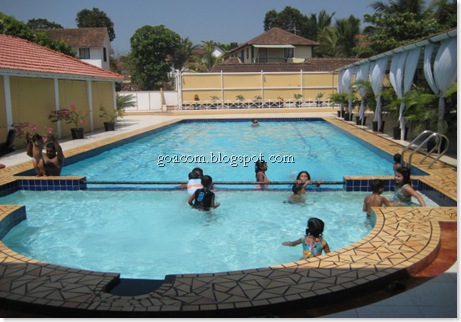
The "Goencar" or as some write the Indian way as  "Goenkar", or for some people who like to refer to the people of Goa as "Goanese", there seems to be a lot of attention pouring towards this typical Goan in the times of off-season for the tourism industry in Goa where the tourists have steadily dissappeared and currently the eye seems to have shifted to focus on local "Goencars" to come and indulge in some fun and playtime with a few perks here and there to urge them out from the comforts of their Goan homes into the fattened ambience of starred hotels in Goa.Goan families enjoying a swimming pool

So it is common these days to receive emails and sms over mobile tempting the Goan with a "much necessary" weekend recharge, a sumptuous buffet or a brunch( they call it breakfast and lunch put together), a swimming pool dip, some dancing and partying added with somholiday in Goa smse games for the kids if you have them and a well-dressed-down tariff to suit the imaginations and make your decision ooze out a little faster.

In a way it has been a kind of stretching out to the local Goan community by the hotel fraternity in Goa who seem to be trying to cover their costs in the off-season with some bait for the locals to bite. It is also a good public relation(read PR) exercise for the hotel industry in Goa  as a means of reaching out to Goans by offering discounted packages as above and thereby instilling a sense of goodwill in the Goencars.

The cost per person at the above detailed 'weekend rechargers" is anything between 1,300 - 1800 per person inclusive of food and sometimes unlimited drinks. A weekend recharge normally also includes a room, high tea, dinner, breakfast, Goan lunch and drinks which may be unlimited in certain hotels in Goa.

The perception that the hotel industry is toying with is the fact that Goans hardly need to venture out of Goa since Goa itself is a beautiful place which many Goans have not enjoyed to the hilt. Also monsoons are considered as the best time to venture outside with family and friends besides being a cheaper option in the off-season. A getaway such as this often leads to a recharge of the mind and body and tends to keep you freshly charged for your next routine at the end of the weekend.Raining in Goa

The short gasp of the holiday can also be a big boost for the children in Goa who have been typeset with holidays squeezed in only during the vacation period and then have to pour on their books in Goa before the next vacation troops in. Such a short weekend burst tends to soothe children as a pleasant surprise and gives them a short and much needed break from their studies and helps to keep them in a healthy state of mind to recharge their energies.

There are some hotels in Goa which come up with unique catchy captions to promote their weekend bouquets and added with a low cost, such offers become hard to resist. A hotel in north Goa offers a thrill in oriental cuisine at a bargain price of Rs 375/- per person and one has a chochildren enjoying a weekend in goaice to pick from a  variety in oriental food. The swimming pool is thrown in this package as an incentive and the response is reportedly astounding with families, friends and even the corporate clients pitching in to enjoy the short lived joy.

Another factor that urges people to go in for these short bursts of a holiday is the ease on the pocket which is an affordable deal in the off season. Also the kind of professional service, great food and lovely ambience along with some royal treatment makes these recharge packages very popular in Goa.

It is therefore evident that Goans are now changing in their attitude towards a holiday in Goa itself and many are opening their arms to some good offers from the hotel industry. Besides, Goans also realise that despite being in Goa since birth, most Goans have only ventured to the Goan beaches while most of Goa has not been seen or experienced. The hinterland of Goa is therefore a great attraction for Goans to explore and the tourism for Goans should therefore be directed in that area so that Goans know their Goa better  and enjoy it at the same time.

By Goacom

Sunday, May 31, 2009

Goa's "Purumentachem Fest" at Margao today

One of the major Church feasts in Goa associated with the stocking of provisions for the monsoon season is the feast of the Holy Spirit at the Holy Spirit Church Margao, which is also fondly known all over the state as the "Purumentachem Fest" of Goa.

While there may be many such feasts close to the monsoon season, it is believed that this feast at Margao essentially derived the reputation of being Margao Holy spirit feast the original  "Purumentachem fest" owing to its closest proximity with the monsoon season in Goa.

"Purumentachem Fest" a konkani term, could easily be translated into "Feast of Provisions " is a time for people to stock provisions for the monsoons. Although the feast has nothing to do with provisions, the timing of the feast induces a large gravitational pull over the crowds who flock to the fair at this feast to net a good bargain against all kinds of vendors displaying their goods, wares, stocks and harvests. Therefore many items and provisions that do not find their way at other feast fairs in Goa can be spotted at this fair. This peculiarity of certain items being sold only at this May month feast at Margao enticed people visiting the fairs to buy stocks in larger quantities by keeping in mind the upcoming Monsoons. That factor is probably the reason why this feast has derived the strongest bond with the term " Purumentachem Fest"

Salted Fish at the fair in Margao is considered to be the best bargain and people from far and wide within Goa and outside make a special trip to Margao for the feast to help themselves to stock up various varieties of salted fish. Kite fish ( solvve) is a distinct favourite amongGoa salted fish salt fish shoppers at this market as they are considered the most ideal for a good fish pickle (parra) and would help to pull off with the best meal on a rainy day. Dried prawns are almost a must and can help in making some delicious curry. Also the Bombay ducks in salted form known as the "Sukhe Bombil" have always been considered as a quick appetizer if roasted against the fire. Therefore this feast helps to keep the dying traditions of making nostalgic pickles such as "parra", 'balchao" and "molho" distinctly alive in Goa.

Besides the salted fish there is also a sale of traditional harvests of distinct Goan onions and other vegetables which can be stocked for the season. There is the usual fair of the wooden furniture where the traditional carpenters from South Goa display their wares be it beds,sofa sets, tables, benches, stools, showcases , cupboards etc etc. The furniture is known to give the sellers a ready easy market to display and sell their goods while also sourcing new customers for their future supplies.

The Grinding stones such as the flat grinding stone as well as the traditional "Rogddo" are also in full flow at the feast and while one goan rogddo may think that the electric mixers have taken over the Goan homes, the enthusiasm of these grinding stone traders to market their goods, belies that theory. There seems to be still a distinct lobby in Goa which is wedded to the apparent difference in taste, rendered with the use of the grinding stones and "rogddos' in their day to day requirements for cooking various curries, masalas and sweets in Goa.

Earthen pots are still ruling the roost in rural as well as urban Goa and the testimony to the fact is the regular return of these breed of traders who faithfully ensure that they occupy a portion of the market square at this Margao feast to show off their traditional wares  which need no introductions.The "Kunnem",the "burkulo" the "gurgulet" and the gardening vases get automatic buyers at this festival owing to their traditional attachment and the utility that  these earthen wares still command from the "niz goenkar" (true goan) more out of emotional attachment and traditional love than the practical compulsion to use them.

Then there are the other wares such as copper and aluminium vessels, garden tools such as pick axes, choppers, hammers etc. There is also a distinct readymade clothesline on display although most of the clothes at such fairs are of poor quality there is always the enthusiasm of the fair which unquestionably propels the visitors to  make frantic buys. Bedsheets and tablecloths besides other cushion materials are also on display and command sizeable crowds in the evenings.

Finally, one cannot miss the "kaddio-boddio", "laddoos"  "revddios" and the random open stalls of "festache chonne" ( Grams of the feast) which can be easily spottkadio bodioed all over the fair with the avid "festakar"  ( feast shopper) ensuring that he/she has atleast one pottli of the "kaddio-boddio" and one or two "poll" of the "festache chonne".  Without these sweets finding their way into Goan homes, people often consider their visit to the fair as an incomplete one and therefore the traders of these eatables are traditionally known to make brisk business by urging the people to buy some sweets in memory of the feast of the Holy Spirit.

Thursday, May 21, 2009

Summer time coolers in Goa

During the months of April and may, Goa is at its hotter end with humidity levels higher than usual. The heat coupled withsummer drinks in Goa the high levels of humidity often makes it unbearable leading to dehydration and fatigue. It is therefore that time of the year when people in Goa are thirsting for that super drink to quench themselves.

Also the desire to have a radiantly moist skin free of wrinkles or blemishes is there in almost everyone. The solution to have such a skin is to have lot of fluids free of alcohol.

In Goa traditionally people are known to have natural drinks to quench their thirst and cooling drinks such as tender coconut water, bhindachem sherbet , limbu sherbet and sugarcane juice are often served to guests in Goa.

Fresh lemon juice contains natural citric acid with ample vitamin C which helps to restore the electrolyte balance in the body. Kococonut water in goakum drinks are known to have proven to be effective against obesity. Another drink consumed by Goans during summertime is "kothmir-jeeryanche udak" which is a boiled decoction of coriander and cumin seeds. Drinks such as panak, tender coconut water keep the skin cells hydrated. Juices help our bodies get rid of toxins.

In Goa, Muslims serve sherbet-jaggery mixed with water and often flavoured with cardamom powder - On the day of Muharram. Panak is a juice prepared with kokum, fresh lime and water flavoured with spices. It is rich in vitamins, minerals and nutrients. Panak is served on the day of Gudi Padwa, specially prepared during vaishakhi in Hindu Mutts.

After separating the Kokum rinds, the seeds that are left are soaked in water for 1-2 hours and then drained. The water in which the seeds were dipped is then flavoured with pepper powder, salt and jaggery. This is traditionally prepared in clay pots.

Another way of making panak is by mixing water in fresh kokum extract( agal ) alosummer drink in Goang with pepper powder, salt, ginger juice and jaggery. Instead of using fresh ginger juice, dry ginger powder (soonth) could be used. Another type of panak is made with lime juice, ginger powder, water and jaggery. Panak should be sweet and sour with a pungent tinge. Vitamin C in lime juice protects skin cells from free radical damage. Therefore drinking panak everyday will promote good health, heal your body, give you energy and prevent skin diseases.

Bhindache sherbet is a welcome drink prepared by soaking kokum rinds in water. After draining these, sugar, cumin seed powder and salt are added. Instead of cumin powder it is flavoured at times with cardamom powder. Panhe is prepared by boiling mature firm mangoes in water. the pulp is extracted mixed with sugar, ginger powder or cardamom powder and salt. This can be stored in bottles. In Maharashtra it is prepared by roasting green mangoes.

Limbache sherbet is a mix of lime juice , water, salt and sugar which is often flavoured with cardamom powder. In Goa, Catholics prepare "orchata" from almonds by blanching and then removkokum drink in Goaing their skins. Almonds are then ground into a consistency of thick coconut milk ( aapross) and strained. Almond milk thus extracted is then mixed with a syrup of one string consistency, continuosly stirred so that no lumps are formed. this is cooked till a thick syrup is formed, rose essence or almond essence is added and it is preserved in a bottle. Cashew nuts are used in the preparation in case almonds are unavailable. Orchata is always served on special occasions in diluted form.

Also types of fruit syrups called Xerope are prepared in catholic homes in Goa. Hindus term Xerope as Sherbet. Xeropes are prepared from local limes grown in Goa, which have a thick pale orange skin when ripe. This is known as Xerope de limao. Kokum syrup is called Xerope de brindao whereas Jamun (jambla) syrup is called Xerope de jambulao.Syrups are also prepared from ripe passion fruits.

The most ideal syrup, Xerope or sherbet should always be the refreshing one with the right proportions of all the ingredients used especially the juices and the sugar. With Goa experiencing the heat of the moment, it could be a good time to try your hand at the various options available to Goans to cool themselves the most natural way.

Tuesday, April 14, 2009

Goan Cuisine : Arroz refogado with Chourico

The Arroz refogado with Chourico is a traditional Portuguese cuisine influenced Goan dish, as the name itself suggests. The Arroz means the pulao while the chourico is the pork sausage. So indeed this preparation is of Pulao with sausages for garnishing.

Pulao, is a rice based dish in which rice is browned in oil, and then cooked. Depending on the local cuisine, it may also contain a variety of meats or vegetables such as sausages etc.

Arroz Refogado with Chourico (sausage pulao)
Ingredients needed for the preparation:
6 cups fine basmati rice (clean from chaff and wash wArroz refogadoell)
12 cups chicken stock 
6 soup cubes (optional)
2 onions (sliced fine)
2 tomatoes (sliced fine)
6 flakes of garlic (sliced fine)
5 tbsp pork fat or oil
6 cloves
10 sausages
Salt to taste
Method:
Fry the sliced ingredients in oil or fat till onions are slightly browned. Add rice, cloves and fry for a while. Stir in the stock and soup cubes as well as salt if necessary and cook on slow fire with the lid on. Stir the rice now and then separate the grains with a fork. When the stock has dried and the rice is cooked put off the fire. Garnish with boiled sausages, peas, french beans, carrots and sliced hardboiled eggs.

Tuesday, April 7, 2009

Goan Cuisine : Crab Xec Xec

Seafood is a delicacy in Goa which is most desired by Goans. So naturally there are several preparations of seafood and the Goan cuisine is full of lip smacking delicious dishes which Goans prepare throughout the year.

However for the "crab xec xec", the rock crabs which are found in Goa on the banks of the rivers or on the riversides are the best compared to the sea crabs which tend to be softer than the rock crabs.However the recipe as under is suitable to both sea and rock crabs which have a thick shell and are tough to crack.

The following is a sample recipe to prepare the rock crab xec xec.

Keep the following ingredients ready:
8 - 10 medium sized rock crabs ( or sea crabs)
8 tbsp grated coconutcrab xec xec
6 kashmiri red chillies
2 tbsp coriander seeds
10 peppercorns
4 cloves
2 tbsp cooking oil
2 onions finely chopped
½ tsp ginger garlic paste
¼ tsp turmeric powder
¼ tsp tamarind juice
2 green chillies (chopped)

Goan method of preparing crab xec xec:
Clean the crabs well. If they are rock crabs do ensure that all the dirt is cleaned. An old toothbrush is a good tool to clean crabs.

Next pour the coconut in the pan and roast it lightly and keep it in a separate container.

Now roast the chillies and the spices in the pan separately

Now pour the entire roasted ingredients in a mixer to grind them or better use a stone grinder to grind them to a fine paste with a little water.

Heat the oil, brown the onion in the container , stir the ginger-garlic paste and turmeric powder. Fry for a few seconds, add the crabs, mix well and sprinkle tamarind juice. Add around half a cup of water, cover the pan and after around 10 minutes stir in the roasted spice paste, salt and green chillies. Cook the preparation until it is relatively thick.

Saturday, April 4, 2009

Goa Cuisine : Goan Sannas

"Sannas" are commonly known as the Goan rice cakes in the world outside Goa. But to the traditional Goan foodie, Sannas are an inseparable part of any festivity be it the  Church feast, birthday party, anniversary, christening, communion, or simply a bash, the sannas have to be decorating the table.

Sannas, are essentially a substitute for bread and are made from steamed  rice and coconut toddy and is a spongy, white,  and warmly sweet Goan speciality . Many outside Goa consider  Sanna to be a Goan variant of idli  a south Indian dish which is made from rice, udad dal( for fermentation), but without the coconut or the toddy. So while sannas may appear to resemble idlis on the outside, they are completely different in texture, as well as in taste. The difference between the two is like chalk and cheese.GoanSannas

Sannas are a distinct Goan delicacy, often  served as an accompaniment to a meal or as a starter in itself . It is a steamed-bread made from fat ground rice, fresh coconut, salt, sugar and toddy. Toddy forms the most essential part of the sannas and contributes to its distinct taste while also making it light.

Sannas are extremely popular among native people of Goa and also among migrated Goans such as the Mangalorean catholic community or any Goan community settled abroad. Sannas  are  popular among Goan Catholics and Hindus alike and prepared by them on several special occasions.  

Traditionally, among Goan catholics, Sannas are served with a Goan pork dish called Sorpotel which is widely popular. The preparation of Sannas entails gentle grinding wherein there is no heat generated during mixing, resulting in a healthy mixture full of vitamins . Sannas are wheat free, gluten free and fat free and because they are steamed, their appeal is absolutely distinct in taste.

Method of preparing Sweet Goan Sannas
Ingredients needed for the preparation:
2 1/2 kg Goa rice ( traditional Goan rice is best)
2-3 large fresh coconuts
11/4 kg sugar
1 ½ bottle fresh toddy
1 tbsp salt or to taste
Method:

Soak the rice overnight. In the morning grind the rice to a fine paste. Grate the coconuts and grind them. Take the toddy and strain it separately to remove any particles or sediments.

Now mix all three, i.e the ground rice, the coconut and the toddy. Add the sugar and mix the entire mixture. Add little water and salt to the mixture and pour it into a large container and keep it aside till the mixture begins to rise which should take a time of around 4 hours.

Next water is kept to boil in the "kompro", a large copper vessel with an air-tight lid used for cooking sannas. Take some saucers and pour the mixture into each saucer known as "vanttleo" ( which are made of stainless steel)and arrange them on the kompro stand and keep for steaming for around 25 minutes on high heat.

The time could be more depending on the size of the "vanttleo". After the first batch of "vanttleo' mixture is ready into steaming sannas, the next batch is ready for cooking.The freshly made Sannas are often oozing with a lovely aroma and are spongy-soft in their texture and absolutely delicious.

Have a Sannnatastic meal!

Blog Widget by LinkWithin